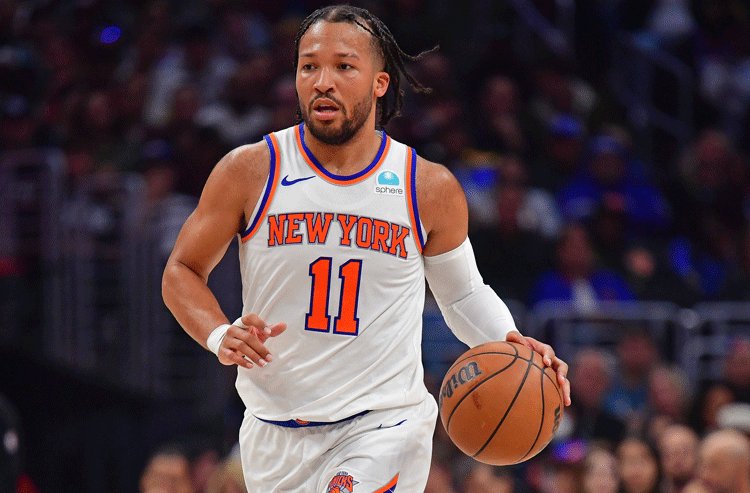
The New York Knicks and Los Angeles Lakers. Just the mention of these two legendary franchises ignites a passionate debate among basketball fans, transcending generations and coasts. It's a rivalry steeped in history, iconic moments, and superstar clashes. But beyond the highlight reels and the roar of the crowd, what do the numbers truly tell us about these epic confrontations? This guide dives deep into advanced player statistics in Knicks vs. Lakers matchups, uncovering the statistical bedrock that defines this historic rivalry.
Forget surface-level box scores; we're peeling back the layers to reveal who truly dominated, where the strategic advantages lay, and how individual brilliance shaped the outcomes. If you’re looking to understand the statistical nuances of one of the NBA's most compelling rivalries, you're in the right place.
At a Glance: Key Statistical Takeaways
- Lakers typically outscore the Knicks: Historically, Lakers players average 110.3 PPG against the Knicks, compared to 105.6 PPG for the Knicks against the Lakers.
- Lakers more efficient shooters: The Lakers boast higher historical field goal (47.2%) and three-point percentages (39.5%) than the Knicks (44.3% FG, 36.5% 3P) in this rivalry.
- Individual Legends shine bright: Kobe Bryant (32.5 PPG) and Carmelo Anthony (28.5 PPG) stand out as the top historical scorers for their respective teams in these matchups.
- Rebounding slightly favors Lakers: Lakers average 45.1 rebounds per game against the Knicks, just edging out the Knicks' 43.8 RPG.
- Recent trends are tight: Since 2005, the Lakers hold a 25-20 advantage in head-to-head games, but recent matchups show varying form for both teams.
Unpacking the Rivalry's Statistical Legacy
The Knicks-Lakers rivalry isn't just about big markets; it's about contrasting styles, superstar power, and often, championship aspirations. Over decades, these teams have created a rich tapestry of head-to-head battles, each contributing to a compelling statistical narrative. While raw points and wins tell one story, advanced metrics and player-specific breakdowns offer a much richer understanding of performance.
The Knicks' Enduring Fight: Breaking Down Their Numbers Against L.A.
Historically, the New York Knicks have consistently brought a tough, often gritty, game when facing the Lakers. Their team averages in these matchups speak to a persistent effort, even when facing formidable Lakers squads.
Knicks players, on average, have notched 105.6 points per game against the Lakers. While not always leading to wins, this offensive output showcases their ability to compete. Their shooting efficiency in these high-stakes games stands at 44.3% from the field and 36.5% from beyond the arc. These percentages, while solid, often highlight the challenge of maintaining high-level efficiency against the Lakers' defense.
Beyond scoring, the Knicks have averaged 43.8 rebounds, 10.2 assists, and 7.5 steals per game in these contests. These figures paint a picture of a team that typically competes on the boards, moves the ball, and pressures opponents defensively.
Knicks Stalwarts: Individual Brilliance in the Rivalry
Certain Knicks players have consistently elevated their game when facing the purple and gold:
- Carmelo Anthony: A true scoring machine, Anthony averaged an impressive 28.5 points per game against the Lakers. He not only led the scoring charge but also holds Knicks records for most games played (23), most minutes (844), and most three-pointers made (35) in this specific rivalry. His ability to create his own shot and light up the scoreboard was a consistent threat.
- Amar'e Stoudemire: Known for his powerful dunks and consistent scoring, Stoudemire averaged 22.1 PPG and 8.5 RPG. His inside presence often provided a crucial counter to the Lakers' frontcourt.
- Patrick Ewing: The iconic Knicks center delivered 20.5 PPG and 10.3 RPG, embodying the toughness and resilience of the franchise. Ewing also holds the record for the most victories for the Knicks against the Lakers, with 13 wins, a testament to his sustained impact over his career.
- Iman Shumpert: While not a primary scorer, Shumpert carved out his niche defensively, holding the Knicks' record for most steals (15) against the Lakers, showcasing the importance of defensive impact.
These individual performances aren't just statistics; they are the threads that weave the narrative of the Knicks' effort and success against their West Coast rivals.
The Lakers' Dominance: A Closer Look at Their Numbers Against New York
The Los Angeles Lakers, a franchise synonymous with championships and star power, have historically demonstrated a strong performance against the Knicks. Their statistical averages reflect an often potent and efficient offensive attack.
Lakers players, on average, have scored 110.3 points per game when matched up against the Knicks, a notable advantage over their counterparts. This scoring prowess is backed by superior shooting efficiency: 47.2% from the field and an impressive 39.5% from three-point range. These figures underscore the Lakers' ability to convert shots at a higher clip, often dictating the pace and outcome of games.
On the glass, the Lakers have averaged 45.1 rebounds per game, slightly surpassing the Knicks. They've also distributed the ball more effectively, averaging 11.5 assists per game, and applied similar defensive pressure with 8.1 steals per game.
Lakers Legends: Rivalry Defining Performances
The Lakers' historical edge is largely built on the shoulders of some of the game's greatest players, who consistently delivered against the Knicks:
- Kobe Bryant: The "Black Mamba" was a force of nature against the Knicks, averaging an astonishing 32.5 points per game. Kobe holds numerous Lakers records in this rivalry, including most games played (34), most minutes (1,244), most victories (24), most steals (21), and most three-pointers made (45). His competitive fire and clutch performances were legendary.
- Shaquille O'Neal: Shaq's dominant inside presence translated to 27.1 PPG and 12.3 RPG against the Knicks. His sheer power and unstoppable post moves presented an almost insurmountable challenge for New York's big men.
- LeBron James: Even in his later career, LeBron continued to impact this rivalry, averaging 28.3 PPG and 7.5 APG. His all-around game, combining scoring, passing, and leadership, kept the Lakers a perennial threat.
These players didn't just accumulate stats; they created moments that defined the rivalry, showcasing individual brilliance that often tipped the scales in favor of Los Angeles.
Beyond Averages: Head-to-Head Trends and Recent Form
While historical averages provide a broad strokes picture, examining more recent trends and specific matchup data offers crucial context for the rivalry's current state. For a deeper look at individual player performance across this storied rivalry, you might find comprehensive breakdowns illuminating, especially when looking at the historical contributions of specific players across eras. You can find more detailed analyses of individual Knicks vs Lakers player stats that illustrate how these legends stacked up.
The Modern Era (Since 2005): Lakers Hold the Edge
Since 2005, the New York Knicks and Los Angeles Lakers have squared off in 45 matches. The Lakers have maintained a statistical advantage during this period:
- Lakers Wins: 25 matches (averaging 107.9 points per game, allowing 103.8 opponent points per game).
- Knicks Wins: 20 matches (averaging 103.8 points per game, allowing 107.9 opponent points per game).
This modern H2H clearly shows the Lakers generally outperforming the Knicks, both offensively and defensively. They score more points and concede fewer, a formula for consistent success.
When we consider betting metrics, the picture gets a bit more nuanced: - Against The Spread (ATS) Win Percentage: 51.3% (meaning bets on either team against the spread landed correctly just over half the time).
- Total Points Over Percentage: 53.8% (suggesting games in this period slightly more often went "over" the predicted total score).
These figures indicate that while the Lakers win more often, matchups are often competitive enough that betting outcomes aren't a foregone conclusion, and scores tend to lean slightly higher.
Recent Form: The Last 5 Games
Looking at the most recent five games provides a snapshot of current team dynamics, which can be crucial for understanding momentum and immediate prospects:
New York Knicks (Last 5 Games):
- Record: Won 3, Lost 2
- Average Points Per Game: 116.2
- Average Opponent Points Per Game: 90.2
- ATS Win Percentage: 100.0% (meaning they covered the spread in all 5 games!)
- Total Points Over Percentage: 0.0% (meaning all 5 games went "under" the predicted total).
This recent streak for the Knicks highlights a fascinating trend: they've been winning, scoring well, and — crucially — playing exceptionally stingy defense, allowing only 90.2 PPG. Their 100% ATS suggests they've consistently outperformed expectations. The 0% Over suggests lower-scoring affairs, potentially driven by their strong defense.
Los Angeles Lakers (Last 5 Games): - Record: Won 2, Lost 3
- Average Points Per Game: 118.0
- Average Opponent Points Per Game: 116.0
- ATS Win Percentage: 60.0%
- Total Points Over Percentage: 40.0%
The Lakers, in their last five, have a losing record. While their offensive output (118.0 PPG) remains high, they're also conceding a high number of points (116.0 PPG), indicating potential defensive vulnerabilities. Their ATS and Over percentages show a more mixed bag compared to the Knicks' dominant recent betting performance.
This recent data suggests that if these teams were to meet today, the Knicks might carry a defensive and "value" edge, despite the Lakers' historical dominance in scoring.
Iconic Moments & Statistical Anomalies
The Knicks-Lakers rivalry isn't just a collection of numbers; it's a series of memorable games, some of which stand out for their statistical peculiarities or dramatic finishes. These aren't just anecdotes; they're data points reflecting critical in-game performance.
- February 15, 2012: Lakers 92, Knicks 91 (OT)
- This close overtime battle saw Kobe Bryant tally 34 points and Amar'e Stoudemire respond with 32 points. It's a prime example of individual scoring duels dictating the game's outcome, pushing both teams to their limits in a defensive slugfest that ultimately swung on a single point.
- November 29, 2016: Lakers 129, Knicks 123 (2OT)
- One of the highest-scoring games in the rivalry's history, going into double overtime. Such games highlight exceptional offensive outbursts from both sides, pushing average points per game higher and testing team endurance and depth.
- January 13, 2019: Lakers 119, Knicks 112
- The Lakers won, dominating the boards with 52 rebounds compared to the Knicks' 45. This illustrates how control of the paint and second-chance opportunities can be a decisive factor, often overlooked in basic scoring summaries.
- December 25, 2015: Lakers 111, Knicks 106
- A Christmas Day clash where the Lakers emphasized ball movement, achieving 31 assists to the Knicks' 25. High assist numbers often correlate with efficient offense and team cohesion, showcasing a different path to victory than individual heroics.
- January 10, 2017: Lakers 116, Knicks 104
- In this contest, the Lakers showcased their rim protection with 10 blocks to the Knicks' 7. Defensive statistics like blocks are critical in understanding how teams suppress opponent scoring and protect their paint, contributing significantly to overall defensive efficiency.
- February 22, 2018: Lakers 124, Knicks 106
- The Lakers won convincingly, but committed 25 fouls compared to the Knicks' 20. While fouls can indicate aggressive defense, excessive fouling can also lead to free throw disparities and opponents getting into the bonus early, impacting game flow and potentially keeping a game closer than it should be.
These specific game examples demonstrate that while final scores are important, the underlying statistics—rebounding, assists, blocks, and even fouls—reveal critical aspects of how each team approached and executed their strategy.
What These Advanced Numbers Tell Us About the Rivalry
Moving beyond basic box scores allows us to develop a more sophisticated understanding of this rivalry.
- Efficiency vs. Volume: While Carmelo Anthony put up huge scoring numbers for the Knicks, the Lakers' overall higher field goal and three-point percentages suggest a more consistently efficient offensive system, often driven by players like Kobe and LeBron. This means the Lakers didn't always need to shoot more often; they simply converted at a higher rate.
- Impact of Superstar Eras: The dominance of players like Kobe, Shaq, and LeBron for the Lakers, reflected in their impressive individual statistics and team records, directly correlates with the Lakers' overall statistical advantage in the rivalry. The Knicks, while having their own stars (Ewing, Melo), often struggled to match the sustained, multi-player superstar power of the Lakers during their peak eras.
- The Importance of Role Players (and their numbers): While not explicitly detailed in every ground truth point, numbers like Iman Shumpert's steals record highlight that contributions beyond scoring are vital. Defensive specialists, rebounders, and playmakers are crucial statistical contributors even if their point totals aren't eye-popping.
- Game Control Metrics: Stats like rebounds, assists, and steals aren't just individual achievements; they're indicators of team control. The Lakers' slight edge in rebounds and assists, for example, suggests they've often controlled the tempo and dictated possessions more effectively.
- Recent Trends vs. History: The recent "last 5 games" data presents a fascinating contrast. While historically the Lakers have been superior, the Knicks' recent defensive prowess and 100% ATS mark a shift in their recent form. This suggests that past performance, while indicative, isn't always predictive of immediate outcomes, especially when team compositions and strategies evolve. The data shows the Knicks have adapted to a lower-scoring, grind-it-out style that has proven effective.
Practical Applications: How to Use These Insights
For fans, analysts, and even casual observers, understanding these advanced player statistics and historical trends can significantly enhance your viewing experience and provide a framework for future predictions.
- When analyzing upcoming matchups: Don't just look at season averages. Consider how key players have historically performed against this specific opponent. Does a certain player consistently struggle or thrive against the other team's defense?
- Spotting key matchups: If the Lakers historically shoot better from three, identify which Knicks defenders are crucial in closing out on shooters. If the Knicks are recently playing lockdown defense, identify which Lakers' offensive stars are most impacted.
- Evaluating "clutch" performance: While not explicitly provided here, diving into player stats in late-game situations in these rivalry games would further illuminate who truly steps up when the pressure is highest.
- Understanding coaching strategies: Does a team consistently try to run more when facing the other? Do they prioritize slowing down a specific player at the expense of other defensive assignments? The statistics often reveal the underlying strategic intentions.
Your Next Steps in Rivalry Analysis
The Knicks vs. Lakers rivalry is a gift that keeps on giving, and the numbers only deepen our appreciation for it. From the historical dominance of Kobe and Shaq to the recent defensive resurgence of the Knicks, the statistics provide a robust framework for understanding the ebb and flow of this storied matchup.
As you follow future games, pay attention not just to the final score, but to the individual player matchups, the rebounding battles, the assist numbers, and the defensive efforts. These advanced metrics, combined with the context of historical performance, will allow you to read the game on a much deeper level. The story of the Knicks and Lakers isn't just about two cities; it's about the relentless pursuit of excellence, captured vividly in the numbers.