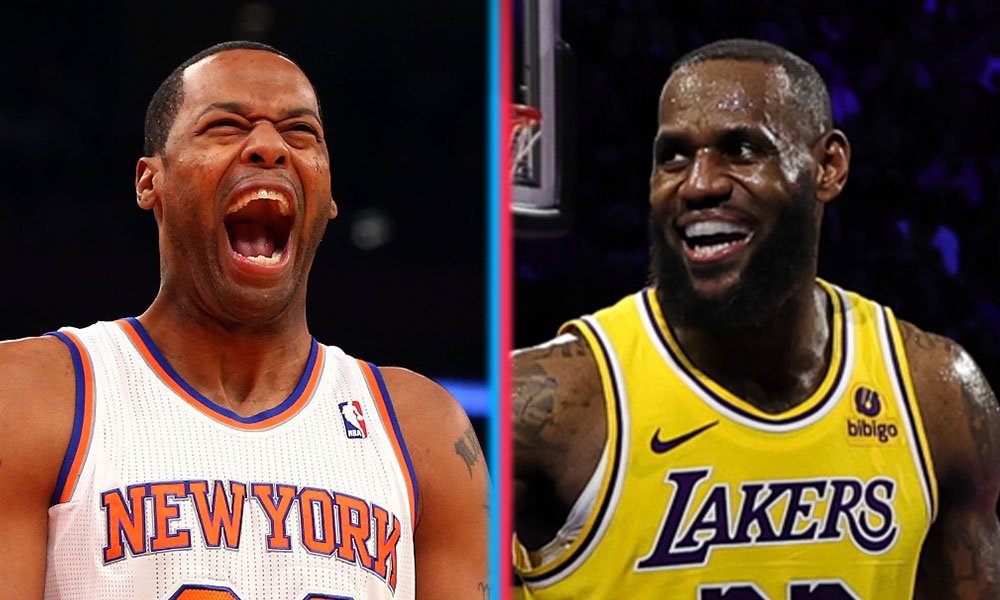
The storied rivalry between the New York Knicks and the Los Angeles Lakers isn't just about iconic jerseys, sold-out arenas, or coast-to-coast fanbases; it’s a deep-seated clash steeped in decades of competitive history. When we dive into the Estadísticas Históricas de Jugadores Knicks vs. Lakers, a fascinating picture of individual brilliance and team dominance emerges, revealing why this matchup consistently captivates the NBA world. It's a tale told not just in wins and losses, but in the raw numbers each player etched into the hardwood.
Forget casual observations and media narratives for a moment. What do the cold, hard statistics tell us about how players from these two legendary franchises have performed when pitted against each other? This comprehensive guide digs deep into the numbers, offering insights into who truly shined brightest and which team ultimately held the statistical edge.
At a Glance: Key Takeaways from Knicks vs. Lakers Player Stats
- Lakers' Overall Edge: Historically, Lakers players have outperformed Knicks players in average points, field goal percentage, three-point percentage, rebounds, and assists per game in head-to-head contests.
- Individual Scorching: Kobe Bryant leads all players with an astonishing 32.5 points per game against the Knicks, while Carmelo Anthony tops the Knicks with 28.5 points per game against the Lakers.
- Rebounding Prowess: Shaquille O’Neal (Lakers) and Patrick Ewing (Knicks) stood out as dominant forces on the boards in these matchups.
- Playmaking Brilliance: Lakers players, spearheaded by talents like LeBron James, consistently dished out more assists.
- Kobe's Enduring Legacy: Bryant holds numerous records against the Knicks, including most games, wins, steals, three-pointers, and minutes played.
- Carmelo's Impact: Anthony leads Knicks players in games, three-pointers, and minutes played against the Lakers.
The Enduring Narrative: Why This Rivalry Matters
The New York Knicks and Los Angeles Lakers represent more than just basketball teams; they embody a cultural divide and a shared pursuit of championship glory. From the glitz of Hollywood to the grit of Madison Square Garden, these franchises have produced some of the NBA's most memorable moments and transcendent superstars. The historical significance of their encounters transcends mere regular-season games, often feeling like playoff battles, regardless of their respective standings.
Understanding the historical player statistics between these two titans isn't just about trivia; it's about appreciating the unique challenges and opportunities that arose when a Laker legend stepped onto the court against a Knicks icon. It highlights how certain players elevated their game, leaving an indelible mark on this celebrated rivalry.
Averages Tell a Story: Team Performance Across Decades
When we look at the collective output, a clear pattern emerges that illustrates a historical advantage for the Purple and Gold. The Lakers have consistently posted more robust average statistics against the Knicks, suggesting a broader base of offensive firepower and overall efficiency.
Lakers players averaged an impressive 110.3 points per game against the Knicks, showcasing a potent offense that often proved difficult to contain. This scoring output was fueled by a strong 47.2% field goal percentage and an even more remarkable 39.5% three-point percentage, indicating both efficient interior play and effective perimeter shooting. On the glass, Lakers players collectively secured 45.1 rebounds per game, often controlling the battle for possession. Their ball movement was also superior, with an average of 11.5 assists per game, reflecting a more collaborative offensive approach. Defensively, Lakers players also had a slight edge, averaging 8.1 steals per game.
In contrast, Knicks players averaged 105.6 points per game against the Lakers. While a respectable number, it falls short of their rivals. Their shooting efficiency was also lower, with a 44.3% field goal percentage and a 36.5% three-point percentage. Knicks players averaged 43.8 rebounds, 10.2 assists, and 7.5 steals per game against the Lakers. These numbers, while solid, consistently trail the Lakers' averages, hinting at the historical challenge the Knicks faced in these matchups. The overall picture painted by these averages points to a Lakers squad that, on balance, often found more ways to dominate statistically when facing New York.
Knicks' Vanguard: The Stars Who Shined Against LA
Despite the overall team averages leaning towards the Lakers, several Knicks players delivered truly exceptional individual performances, cementing their places in the rivalry's lore. These athletes consistently elevated their game, providing memorable moments for the MSG faithful.
Carmelo Anthony stands out as the most prolific Knicks scorer against the Lakers in recent memory. He averaged a scorching 28.5 points per game in these matchups, proving to be an almost unstoppable offensive force. Anthony played the most games (23), scored the most three-pointers (35), and accumulated the most minutes (844) for the Knicks against the Lakers, showcasing his consistent presence and impact during his tenure in New York.
Another powerful presence was Amar’e Stoudemire, who brought his dynamic athleticism to the forefront. Stoudemire averaged 22.1 points per game and an impressive 8.5 rebounds per game against the Lakers, often battling with their formidable frontcourts. His ability to score inside and provide second-chance opportunities was crucial for the Knicks.
Perhaps the most iconic Knick, Patrick Ewing, also left his mark. Ewing averaged a double-double with 20.5 points per game and a dominant 10.3 rebounds per game against the Lakers. His consistent two-way play anchored the Knicks for years, and he holds the distinction of having the most victories (13) for the Knicks against the Lakers, a testament to his leadership and competitive drive.
Beyond these scoring and rebounding titans, other Knicks carved out niche statistical achievements. Iman Shumpert, known for his defensive intensity, achieved the most steals (15) for the Knicks against the Lakers, often tasked with guarding perimeter threats. These individual heroics underscore the fact that even when team averages lagged, Knicks players frequently rose to the occasion, making Knicks vs Lakers game player stats a compelling study for any fan.
Lakers' Pantheon: Dominance Personified Against NY
On the other side of the rivalry, the Lakers’ pantheon of stars truly soared, often delivering legendary performances that swung games and defined eras. Their statistical output against the Knicks is nothing short of breathtaking, highlighting a roster consistently packed with generational talent.
Leading the charge is the incomparable Kobe Bryant, whose performances against the Knicks were often a masterclass in scoring and competitive fire. Bryant averaged a staggering 32.5 points per game against New York, the highest of any player from either side in this rivalry. His relentless drive and clutch shots made him a nightmare for the Knicks defense. Bryant’s legacy against New York is cemented by holding numerous all-time records for the Lakers in this matchup: he played the most games (34), secured the most victories (24), recorded the most steals (21), sank the most three-pointers (45), and logged the most minutes played (1,244). These numbers illustrate not just his brilliance, but his longevity and consistent impact.
The sheer power of Shaquille O’Neal was another significant factor in the Lakers' dominance. Shaq averaged 27.1 points per game and an earth-shattering 12.3 rebounds per game against the Knicks. His unguardable presence in the paint often overwhelmed New York's centers, leading to easy scores and crucial offensive boards.
More recently, LeBron James has continued this tradition of excellence. Even as he transitioned to the Lakers, James maintained his elite performance against the Knicks, averaging 28.3 points per game and 7.5 assists per game. His ability to both score and facilitate offense showcases his comprehensive impact on the game, keeping the Lakers formidable in these marquee matchups. The combined offensive prowess of these Lakers superstars undoubtedly shaped the Knicks vs Lakers game player stats for decades.
Unforgettable Moments: Landmark Games and Statistical Anomalies
Beyond the individual and team averages, specific games stand out as statistical benchmarks, highlighting moments of intense competition, unusual stat lines, and unforgettable finishes. These aren't just numbers; they're snapshots of history.
One such nail-biter was the Lakers' 92-91 overtime win on February 15, 2012. In a duel between two offensive powerhouses, Kobe Bryant delivered 34 points for the Lakers, while Amar’e Stoudemire countered with 32 points for the Knicks. The game came down to the wire, a testament to the individual brilliance on both sides.
High-scoring affairs are often the most thrilling, and the Lakers’ 129-123 double-overtime victory on November 29, 2016, remains one of the highest-scoring games in the rivalry's recent history. This marathon contest showcased explosive offenses and incredible endurance, pushing both teams to their limits.
Rebounding battles are often key indicators of team effort and physicality. On January 13, 2019, in a 119-112 Lakers win, Los Angeles asserted its dominance on the glass, recording 52 rebounds to the Knicks' 45. This disparity in rebounding often translates to more possessions and second-chance points, illustrating a critical component of the Lakers' success.
Teamwork shines through assists. On December 25, 2015, during a Christmas Day matchup that saw the Lakers win 111-106, Los Angeles demonstrated superior ball movement with 31 assists compared to the Knicks' 25. This collective passing effort often unlocks more efficient scoring opportunities and points to a well-oiled offensive machine.
Defensive plays can be just as impactful. On January 10, 2017, in a 116-104 Lakers victory, the Lakers’ defense made a statement with 10 blocks to the Knicks' 7. Rim protection often disrupts offensive flow and can be a huge momentum shifter. While less glamorous, even fouls can tell a story. On February 22, 2018, the Lakers committed 25 fouls to the Knicks' 20 in a 124-106 Lakers win. This higher foul count for the winning team can sometimes indicate aggressive play or a willingness to challenge shots and drives, even at the risk of free throws.
Beyond the Box Score: What These Stats Really Mean
Analyzing these statistics offers more than just historical trivia; it provides crucial insights into the enduring dynamics of the Knicks-Lakers rivalry and the nature of NBA dominance.
The consistent statistical edge held by the Lakers, particularly in points per game, field goal percentage, and assists, suggests a historical blueprint for success against the Knicks. This isn't just about having individual stars (though they certainly did); it implies a more efficient and cohesive team offense that consistently found ways to put points on the board. The higher three-point percentage for the Lakers, for instance, points to their ability to stretch the floor and capitalize on modern offensive strategies even in earlier eras.
Conversely, the Knicks' statistics, while featuring impressive individual efforts, reveal a team that often relied more heavily on heroics rather than consistent team-wide efficiency in these matchups. While players like Carmelo Anthony and Patrick Ewing delivered spectacular numbers, the collective output sometimes fell short of matching the Lakers' consistent offensive flow. This doesn't diminish their achievements; rather, it contextualizes the challenge they faced.
Furthermore, the individual records held by players like Kobe Bryant (most games, wins, steals, three-pointers, minutes) highlight the impact of sustained greatness and longevity within a single franchise. Bryant's ability to maintain an elite level of play over so many games against a marquee opponent is a testament to his legendary career. Similarly, Carmelo Anthony's leadership in games, three-pointers, and minutes for the Knicks against the Lakers underscores his central role during his time in New York.
The Ever-Evolving Narrative: What to Look For Next
The historical player statistics between the Knicks and Lakers paint a clear picture of individual brilliance, team dynamics, and memorable clashes. While the Lakers have historically held a statistical edge, the Knicks have consistently produced stars who rose to the occasion, making every matchup an event.
As the NBA continues to evolve, so too will the statistical narratives of this iconic rivalry. Modern analytics provide an even deeper dive into player efficiency, defensive impact, and clutch performance. Future matchups will undoubtedly add new layers to the historical statistics of Knicks vs Lakers players, offering new records to be broken and new legends to be forged.
For fans, understanding these historical numbers deepens the appreciation of every future encounter. Will the Knicks find a new collective offensive rhythm to consistently challenge the Lakers' statistical dominance? Will new Lakers stars emerge to rival the records set by Kobe and Shaq? These are the questions that keep the rivalry alive and fascinating. The next time these two titans clash, remember the numbers, the players, and the moments that have made this one of basketball's most enduring battles. Pay attention to those individual matchups and how they might contribute to these evolving player statistics. The game, after all, is a constant conversation between history and the making of new history.