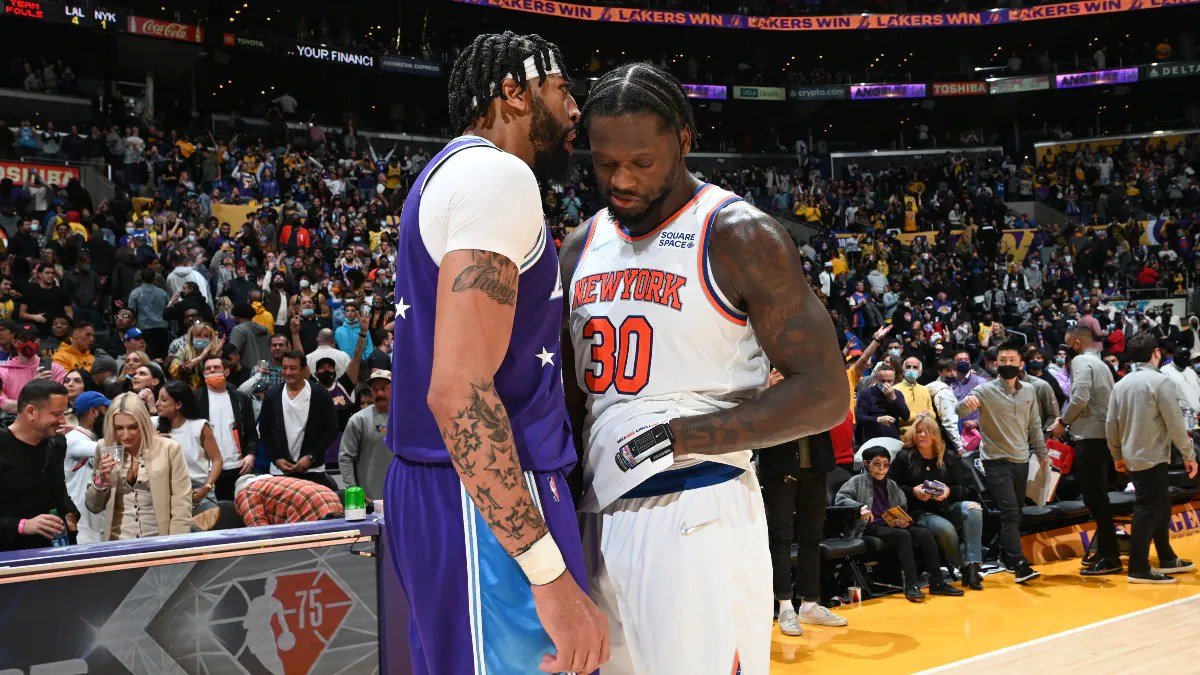
The legendary clash between the New York Knicks and the Los Angeles Lakers isn't just a game; it's a cultural phenomenon, a battle of titans that captivates basketball fans worldwide. But beyond the glitz, the star power, and the roar of the crowd, a deeper narrative unfolds, one driven by numbers. Understanding the Impacto de las Estadísticas Individuales en los Resultados Knicks vs. Lakers is crucial for anyone trying to grasp the ebb and flow of this storied rivalry. It's not just about who wins, but how they win, and which individual performances tilt the scales.
You see, while basketball is undeniably a team sport, the collective strength is often a direct sum (and sometimes a synergistic multiplication) of individual brilliance. A single player’s shooting efficiency, defensive prowess, or playmaking ability can be the seismic force that shifts momentum, breaks stalemates, and ultimately decides whether the purple and gold or the orange and blue emerge victorious.
At a Glance: What the Numbers Tell Us (Since 2005)
- Lakers Lead the H2H: Since 2005, the Los Angeles Lakers have a slight edge, winning 25 out of 45 matches against the New York Knicks.
- Offensive Output: On average, the Lakers score 107.9 points per game (PPG) against the Knicks, while the Knicks average 103.8 PPG against the Lakers.
- Defensive Edge: Conversely, the Lakers concede 103.8 opponent PPG (OPP PPG) to the Knicks, while the Knicks allow 107.9 OPP PPG to the Lakers.
- Betting Trends: The "Win percentage against the spread (ATS)" for this matchup sits at 51.3%, with "Percentage of games with total score over" at 53.8%.
- Recent Knicks Form: In their last 5 games, the Knicks won 3, lost 2, averaging a strong 116.2 PPG and an impressive 90.2 OPP PPG. Their ATS was 100%, but 0% for games with total score over.
- Recent Lakers Form: In their last 5 games, the Lakers won 2, lost 3, averaging 118.0 PPG but allowing 116.0 OPP PPG. Their ATS was 60%, with 40% of games hitting the over.
The Enduring Rivalry: More Than Just Teams
When the Knicks and Lakers face off, you're witnessing history. These are two of the NBA's most iconic franchises, representing the East Coast grit and West Coast glamour. Their matchups are often appointment viewing, drawing in casual and hardcore fans alike. While coaching strategies and team chemistry are vital, the spotlight invariably lands on individual players—the stars, the role players, and the unsung heroes whose actions translate directly into statistical outcomes that influence the final score.
Think about it: a crucial rebound, a perfectly executed assist, a timely block, or a devastating scoring run by one player can single-handedly alter the complexion of a game. These individual statistical contributions are the building blocks of team success, especially when these two storied franchises collide.
Beyond the Box Score: Why Individual Stats Truly Matter
We often look at the final score, but that's just the tip of the iceberg. To truly understand why one team triumphed over the other, you need to dive into the individual performances. These aren't just abstract numbers; they’re concrete reflections of a player's impact on the court.
For instance, a player who consistently grabs offensive rebounds gives their team second-chance points, effectively stealing possessions from the opponent. Someone with a high assist-to-turnover ratio ensures efficient ball movement and minimizes costly errors. And a defensive stopper who forces turnovers or alters shots can shut down an opponent's key scorer, stifling their rhythm. When you start comparing Knicks vs Lakers player statistics, these individual battlegrounds become evident.
Offensive Firepower: Points, Efficiency, and Who Delivers
Scoring is the most obvious measure of individual impact, but it's not just about the raw point total. Efficiency is key. A player who scores 20 points on 8-for-12 shooting is far more impactful than one who scores 20 points on 8-for-25 shooting.
- Points Per Game (PPG): High PPG numbers from star players can often dictate the pace and offensive output of a team. The ground truth data from AiScore reveals that the Lakers have, on average, a higher PPG (107.9) against the Knicks compared to the Knicks' 103.8 against the Lakers since 2005. This slight offensive edge, averaged over 45 games, certainly contributes to the Lakers' overall winning record in the head-to-head.
- Field Goal Percentage (FG%) and 3-Point Percentage (3P%): These stats tell you how efficiently players are scoring. A high-volume scorer with a respectable FG% can carry an offense. In the modern NBA, three-point shooting is paramount. A player who can consistently knock down threes stretches the defense, creating space for teammates.
- Free Throw Accuracy (FT%): Often overlooked until the crucial moments, free throw shooting can win or lose close games. Imagine a superstar hitting two clutch free throws to seal a one-point victory; that's individual statistical impact in its purest form.
When you analyze how these individual offensive metrics stack up, you begin to see patterns. Do the Knicks rely on a few dominant scorers, or is their scoring more distributed? Do the Lakers have a go-to player who consistently delivers efficient points in critical situations? These are the kinds of insights you gain when you dig into the individual player statistics for Knicks vs Lakers games.
Defensive Dominance: Stops, Steals, and Rebounds
While offense often grabs headlines, defense wins championships. Individual defensive statistics are equally, if not more, indicative of a player's all-around value.
- Opponent Points Per Game (OPP PPG): The AiScore data shows the Knicks have historically conceded more points to the Lakers (107.9 OPP PPG) than the Lakers have conceded to the Knicks (103.8 OPP PPG). This implies the Lakers have been slightly more effective defensively in this matchup over the long run. However, the Knicks' recent form shows a dramatic improvement, averaging only 90.2 OPP PPG in their last five games, suggesting a stronger defensive identity has emerged.
- Blocks and Steals: These are direct disruptions. A single block can prevent an easy two points and spark a fast break. A steal can turn defense into instant offense. Players with high block and steal numbers are game-changers on the defensive end.
- Rebounds (Offensive and Defensive): Rebounding is about possession. Defensive rebounds end opponent possessions, while offensive rebounds extend your own. A dominant rebounder can single-handedly control the glass, giving their team more scoring opportunities and limiting the opponent's.
- Defensive Rating: While a team stat, a player's individual defensive rating estimates how many points they allow per 100 possessions. Players with excellent defensive ratings consistently make life difficult for their opponents.
A team like the Knicks, known for its rugged defense, will often see individual players excel in these categories. Similarly, if the Lakers are struggling, you might find their individual defensive efforts are lacking. This deep dive into player defensive statistics helps explain defensive swings.
The Playmakers: Assists, Turnovers, and Court Vision
Basketball is a fluid game, and the ability to create for others is invaluable. Playmakers are the engine of an offense, orchestrating scoring opportunities.
- Assists: This stat directly measures a player's ability to set up teammates for scores. A high-assist player improves team chemistry and ensures the ball moves to the most advantageous positions.
- Assist-to-Turnover Ratio: This is where true playmaking shines. A player might have many assists, but if they also have a high number of turnovers, their impact is diminished. A good ratio indicates intelligent, efficient ball handling and decision-making.
- Court Vision: While not a direct statistical category, a player's ability to "see the floor" often translates into higher assist numbers and fewer turnovers. It’s about anticipating plays and threading passes through tight windows.
Individual brilliance in playmaking can lift an entire offense. If a key point guard is having an off night, struggling with turnovers, or failing to distribute effectively, the team's offensive flow can grind to a halt. The comparison of individual player statistics for these roles offers clarity on who is truly facilitating their team's success.
Clutch Performance: When Every Stat Counts
Some individual statistics carry more weight in crucial moments. These are the stats accumulated under pressure, often with the game on the line.
- Game-Winning Shots: Not an official stat, but the player who consistently hits these shots is invaluable. They often represent the culmination of their overall scoring efficiency and mental fortitude.
- Clutch Free Throws: In tight games, free throws become gold. A player with a high free-throw percentage in the final minutes is a massive asset.
- Defensive Stops in the Clutch: A key block or steal in the waning seconds can be as impactful as a game-winning bucket.
The ability of a few individual players to elevate their performance in these high-stakes situations is often the deciding factor in Knicks vs. Lakers matchups. It’s when individual mental toughness and refined skills combine to produce critical statistical outcomes.
Team vs. Individual: The Synergy of Success
It's tempting to focus on star players, but the truth is that every individual stat, from the superstar's triple-double to the bench player's single crucial offensive rebound, contributes to the larger team narrative.
Individual prowess can create easy opportunities for teammates, drawing double-teams that free up shooters, or commanding attention that opens up driving lanes. Conversely, a struggling individual performance can drag a team down, forcing others to overcompensate or exposing defensive vulnerabilities. The best teams, like the Knicks and Lakers aspire to be, find a way to maximize individual talents within a cohesive system. This allows for an optimal environment where individual player statistics translate into winning team results.
Head-to-Head History: A Statistical Snapshot
Let's ground this discussion in the actual historical data from AiScore, which provides a fascinating overview of this rivalry since 2005.
- Overall Record: In 45 matches, the Lakers hold a 25-20 advantage over the Knicks. This narrow margin reflects a competitive rivalry, where slight statistical edges can tip the balance over time. The Lakers' higher average PPG (107.9) and lower average OPP PPG (103.8) against the Knicks directly correlate with their superior head-to-head record.
- Betting Insights: The 51.3% "Win percentage against the spread (ATS)" suggests that predicting the outcome against the bookmakers' predictions is almost a coin flip, indicating a high level of unpredictability despite the Lakers' historical edge. The "Percentage of games with total score over" at 53.8% implies that more often than not, these games tend to be higher-scoring affairs, which could be attributed to the offensive talents often present on both rosters.
Decoding the Trends: What Recent Numbers Tell Us
Looking at the most recent five games offers a snapshot of current form, which can sometimes diverge from long-term trends.
- New York Knicks (Last 5 Games):
- Record: 3 wins, 2 losses. A solid showing.
- Offensive Output: Averaging 116.2 PPG. This is significantly higher than their long-term average against the Lakers (103.8 PPG), indicating a recent offensive surge.
- Defensive Prowess: Averaging a remarkably low 90.2 OPP PPG. This is a dramatic improvement over their historical 107.9 OPP PPG against the Lakers. This kind of individual and collective defensive effort is a strong indicator of their recent success.
- ATS: 100.0%. This means the Knicks have consistently exceeded expectations set by oddsmakers in their recent games, showcasing their improved performance.
- Total Score Over: 0.0%. This suggests their games have been surprisingly low-scoring despite their high PPG, primarily due to their stifling defense.
- Los Angeles Lakers (Last 5 Games):
- Record: 2 wins, 3 losses. A slight struggle compared to the Knicks.
- Offensive Output: Averaging 118.0 PPG. They are still putting up high offensive numbers, even higher than the Knicks' recent average.
- Defensive Vulnerability: Allowing 116.0 OPP PPG. This is a concern, indicating a less robust defensive effort in their recent outings compared to the Knicks.
- ATS: 60.0%. While positive, it's not as dominant as the Knicks' 100%.
- Total Score Over: 40.0%. This is lower than their long-term average, suggesting their games might not be as high-scoring as they once were, possibly due to their own defensive struggles making opponents' scores less predictable.
These recent trends highlight that while the Lakers hold a historical advantage, the Knicks have shown a strong recent uptick in performance, especially defensively. This means that when these teams meet next, the individual defensive efforts of the Knicks players could be a significant factor.
Predicting Future Encounters: More Than Just Numbers
While individual statistics are powerful indicators, they are not infallible crystal balls. When predicting future Knicks vs. Lakers outcomes, you also need to consider:
- Matchups: How do key individual players match up against each other? Does one team have a specific player who consistently struggles against an opponent's star?
- Injuries: The absence of a single star player can dramatically alter the statistical output of an entire team.
- Coaching Strategies: How coaches adapt their game plans to exploit individual statistical weaknesses or leverage strengths.
- Momentum and Home Court Advantage: While not a stat, the intangible energy of a sellout crowd or a hot streak can influence individual performances.
However, the foundation for any sound prediction always starts with the numbers, particularly the individual player statistics and how they translate into team performance.
Your Game Plan for Watching: What Stats to Track
Next time you tune into a Knicks vs. Lakers game, go beyond just watching the ball. Become a statistical detective.
- Who's Hot From the Field? Pay attention to the shooting percentages of the primary scorers. Are they forcing shots or finding good looks?
- Battle on the Boards: Watch for individual rebounding numbers, especially offensive boards. Who is giving their team extra possessions?
- Turnover Trouble: Keep an eye on the assist-to-turnover ratios for the primary ball-handlers. Are they protecting the ball?
- Defensive Disruptors: Look for players racking up steals and blocks. Are they changing the game on defense?
- Clutch Performers: In the fourth quarter, notice who steps up. Who is hitting free throws? Who is making the critical defensive stops?
By tracking these individual metrics, you’ll gain a much richer appreciation for the game and a deeper understanding of why teams win or lose.
Beyond the Hype: The Real 'Impacto'
The true Impacto de las Estadísticas Individuales en los Resultados Knicks vs. Lakers boils down to this: they are the measurable proof of a player's contribution to their team's success or failure. They explain why the Lakers have historically held an edge, and how the Knicks have recently fortified their defense.
Whether it’s a prolific scorer consistently dropping 30 points, a defensive anchor shutting down an opponent's star, or a savvy playmaker orchestrating a flawless offense, individual statistical impact is the bedrock of team triumph in this epic rivalry. Don't just watch the game; read the numbers, and you'll uncover the true story behind every unforgettable showdown. For a deeper dive into the specific individual numbers, make sure to explore dedicated resources on Knicks vs Lakers player statistics.