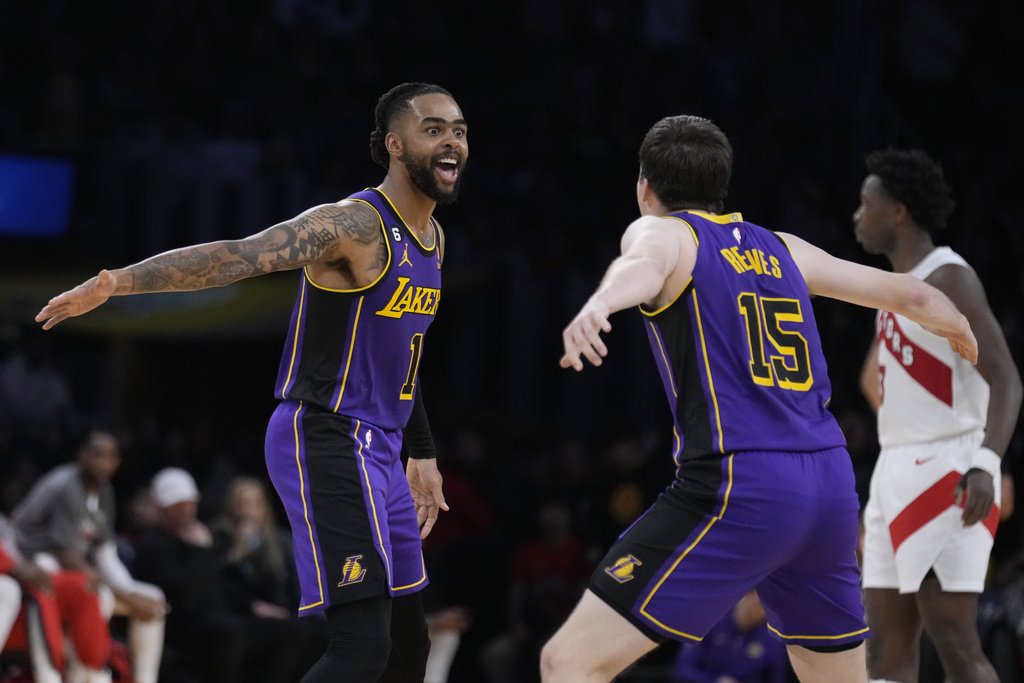
The rivalry between the New York Knicks and the Los Angeles Lakers isn't just a clash of coasts; it's a battle of basketball philosophies, star power, and legendary moments that captivate fans globally. As we peer into the crystal ball for the 2025-26 NBA season, fans on both sides are already buzzing about what future matchups might hold. This comprehensive guide dives deep into the Proyecciones de Estadísticas de Jugadores para Futuros Knicks vs. Lakers games, meticulously analyzing the Knicks' formidable projected roster, Mike Brown's coaching philosophy, and historical trends to forecast how these storied franchises might stack up.
We're not just looking at numbers; we're breaking down how individual talent, team strategy, and the unpredictable ebb and flow of a storied rivalry could shape the box scores of tomorrow.
At a Glance: What to Expect from Future Knicks-Lakers Showdowns
- Knicks' New Identity: Under Coach Mike Brown, the 2025-26 Knicks are projected to feature a potent mix of superstar talent (Jalen Brunson, Karl-Anthony Towns) and elite two-way wings (Mikal Bridges, OG Anunoby), all backed by a deep, versatile bench.
- Historical Edge for Lakers: Historically, the Lakers have averaged higher points, rebounds, assists, and better shooting percentages against the Knicks, often securing more victories in the rivalry's most significant games.
- Star Power Reigns Supreme: Across the decades, dominant players like Kobe Bryant, Shaquille O'Neal, Carmelo Anthony, and LeBron James have consistently been the driving force in these high-stakes contests, delivering standout individual statistical performances.
- Knicks' Defensive Potential: The future Knicks' projected starting five, particularly with the defensive prowess of Bridges, Anunoby, and even point-of-attack specialist Miles McBride off the bench, could significantly stifle opposing offenses.
- Offensive Firepower: Expect robust scoring and playmaking from Jalen Brunson, complemented by the versatile offensive repertoire of Karl-Anthony Towns, potentially elevating the Knicks' historical offensive averages against the Lakers.
- Lakers' Dynamic Unknown: Without a projected 2025-26 Lakers roster, specific opponent player projections are impossible. However, we can infer how the Knicks might counter historical Lakers archetypes, focusing on their strategic defensive matchups and offensive attack plans.
The Storied Rivalry: A Look Back at Knicks-Lakers Player Stats
Before we project the future, it's essential to ground ourselves in the past. The Knicks and Lakers have delivered countless memorable clashes, with individual heroics often deciding the outcome. Historically, the Lakers have held a slight edge in team statistics when facing the Knicks, showcasing a higher scoring average and better efficiency.
Let's break down the general historical team averages, a benchmark for our future projections:
- Knicks vs. Lakers Historical Averages:
- Points: 105.6 PPG
- Rebounds: 43.8 RPG
- Assists: 10.2 APG
- Steals: 7.5 SPG
- Field Goal %: 44.3%
- Three-Point %: 36.5%
- Lakers vs. Knicks Historical Averages:
- Points: 110.3 PPG
- Rebounds: 45.1 RPG
- Assists: 11.5 APG
- Steals: 8.1 SPG
- Field Goal %: 47.2%
- Three-Point %: 39.5%
These figures demonstrate a consistent, albeit slight, statistical advantage for the Lakers across the board. This historical context is vital when considering how future teams might perform, especially when looking at the individual Knicks vs Lakers player stats.
When we zoom in on individual brilliance, certain names immediately come to mind. For the Knicks, Carmelo Anthony led the charge with an impressive 28.5 points per game against the Lakers, showcasing his offensive versatility. Amar'e Stoudemire wasn't far behind with 22.1 points and 8.5 rebounds, while legendary big man Patrick Ewing consistently delivered 20.5 points and 10.3 rebounds. Anthony also holds the record for most games played (23) and minutes (844), along with the most three-pointers (35) for a Knick against the Lakers. Patrick Ewing, however, claims the most victories with 13 wins, highlighting his impact on the team's success. Iman Shumpert, known for his defensive tenacity, recorded the most steals with 15.
On the Lakers' side, Kobe Bryant stands as the rivalry's undisputed individual king, averaging a staggering 32.5 points per game. Shaquille O'Neal dominated the paint with 27.1 points and 12.3 rebounds, while LeBron James continued the trend of superstar performance with 28.3 points and 7.5 assists. Kobe's records are extensive: most games (34), most minutes (1,244), most victories (24), most steals (21), and most three-pointers (45) against the Knicks. His consistent excellence set a high bar for future Lakers players.
These historical data points reveal a consistent pattern: superstar talent, particularly on the Lakers' side, has traditionally dictated the flow and outcome of these games. Now, let's turn our attention to the future Knicks and how their roster might aim to rewrite this script.
The Future Knicks: A Deep Dive into the 2025-26 Roster
The New York Knicks of 2025-26 are shaping up to be a formidable unit, meticulously constructed to blend offensive firepower with defensive tenacity. This isn't just a collection of talent; it's a strategic assembly designed to compete at the highest level.
Coaching Philosophy: Mike Brown's Impact
At the helm is Mike Brown, entering his first season with the Knicks after an impressive run that included an NBA Cup title. Brown's coaching pedigree is well-established, with experience leading teams like the Cleveland Cavaliers (Eastern Conference Championship), Los Angeles Lakers (Conference Semifinals), and Sacramento Kings (three playoff appearances, Coach of the Year award).
Brown is known for instilling a strong defensive culture while optimizing offensive schemes around his best players. His teams typically play with discipline, emphasizing physical play, smart passing, and an organized approach. This coaching style is perfectly suited for the Knicks' projected roster, which boasts multiple elite defenders and versatile offensive threats. Expect Brown to leverage his experience to make in-game adjustments and maintain team cohesion under pressure.
The Projected Starting Five: Knicks' Future Core
The most common starting lineup for the 2025-26 Knicks is projected to be:
- Point Guard: Jalen Brunson
- Shooting Guard: Mikal Bridges
- Small Forward: OG Anunoby
- Power Forward: Karl-Anthony Towns
- Center: Ariel Hukporti
This lineup is a fascinating blend of established superstars, elite two-way players, and promising young talent.
Key Player Projections: How the Knicks' Stars Could Perform
Let's break down the potential statistical contributions of these key Knicks players against an opponent like the Lakers, drawing on their specific skills and Mike Brown's likely system.
1. Jalen Brunson (Point Guard)
Brunson is the offensive engine and a bona fide superstar. His ability to penetrate, hit clutch shots, and distribute makes him central to the Knicks' attack. Against a high-profile opponent like the Lakers, Brunson will be tasked with both scoring and facilitating.
- Projection: 28-32 points, 7-9 assists, 3-4 rebounds. His efficiency (FG% and 3P%) will be crucial, potentially around 47% FG and 38% 3P. His impact mirrors that of past elite guards who thrived in this rivalry.
2. Karl-Anthony Towns (Power Forward/Center)
Towns is an All-Star with an elite offensive repertoire, capable of scoring from all three levels. His defensive ability has also improved over time. He brings a unique blend of size and shooting that can stretch any defense. - Projection: 20-25 points, 9-11 rebounds, 2-3 assists. Expect a high three-point volume and good efficiency (e.g., 40%+ from deep on 7+ attempts), especially when facing potentially larger Lakers bigs. His ability to draw fouls and convert free throws will be a significant asset.
3. Mikal Bridges (Shooting Guard/Small Forward)
Bridges is a great defensive talent with a growing offensive game. His ability to guard multiple positions and contribute efficiently on offense makes him a vital two-way player. He'll likely draw the primary defensive assignment against the Lakers' top perimeter threat. - Projection: 16-20 points, 4-6 rebounds, 3-5 assists, 1-2 steals. His three-point shooting will be critical (38-40%), and his defensive activity will directly impact Lakers' turnovers.
4. OG Anunoby (Small Forward/Power Forward)
Anunoby is another versatile, physical, and tough defender. He brings defensive intensity, positional versatility, and opportunistic scoring. Paired with Bridges, he forms a formidable defensive wing duo. - Projection: 12-15 points, 5-7 rebounds, 1-2 steals, 1 block. His primary role will be defensive disruption, but he's capable of hitting corner threes and finishing strong around the rim (36-38% 3P).
5. Ariel Hukporti (Center)
Hukporti is an interior defender and finisher, providing size and rim protection. His role will be to anchor the defense, rebound, and convert close-range opportunities. - Projection: 8-10 points, 8-10 rebounds, 1-2 blocks. His impact will be felt most on the defensive end, contesting shots and controlling the glass, providing the physical interior presence Mike Brown favors.
Bench Depth: The Game Changers
The Knicks' projected bench is rich with talent and specialized roles, offering Mike Brown ample flexibility.
- Miles McBride (PG): Defensive pest and three-point specialist. Expect crucial minutes for his on-ball defense and timely long-range shooting. (Projected: 6-9 points, 1-2 steals).
- Tyler Kolek (PG): An intelligent, excellent passer who can run the second unit effectively. He provides a different playmaking dynamic.
- Jordan Clarkson (G/F): An "anarchic" off-the-bench scorer, capable of instant offense. He'll provide valuable scoring punch in crucial moments. (Projected: 10-14 points).
- Josh Hart (F): A valuable three-point shooter and exceptional rebounder for his position. His energy and hustle are contagious. (Projected: 8-11 points, 6-8 rebounds).
- Kevin McCullar (G/F): A defensive specialist who contributes rebounds, steals, and blocks. His versatility makes him a strong rotation piece.
- Mohamed Diawara (F): Defensively elite with physical power and positional versatility, a classic Mike Brown type of player.
- Dillon Jones (F): A "tank" who drives to the rim and is an intense physical marker. Adds grit and toughness.
- Guerschon Yabusele (F/C): A facing-basket player with three-point threat and good ball-handling for his size. Can stretch the floor. (Projected: 7-10 points).
- Mitchell Robinson (Center): An intimidating center, if he can stay healthy. His shot-blocking and rebounding are elite. (Potential projection if healthy: 10-12 rebounds, 2-3 blocks).
- Trey Jemison (Center): Mobile, strong center, finisher, rebounder, and shot-blocker. Provides solid depth behind Hukporti.
This deep roster ensures the Knicks can maintain intensity and adapt to various game situations, crucial for facing an elite team like the Lakers. The strategic signing of players like Diawara, Yabusele, Clarkson, and Jemison, along with the acquisition of Dillon Jones, underscores a commitment to versatility and toughness.
The Unseen Opponent: Projecting Against a Future Lakers Squad
Here's where our analysis faces a unique challenge. While we have a detailed look at the 2025-26 Knicks, specific roster information for the Lakers in that same season has not been provided. This means we cannot offer precise statistical projections for individual Lakers players.
However, we can still conduct a meaningful exercise. We can infer how the Knicks, with their projected roster, would likely perform against the types of players who have historically excelled for the Lakers, drawing on the rivalry's established patterns and the general characteristics of a competitive Lakers franchise. You might find a detailed statistical overview of past matchups fascinating, which you can read more about in our article on Knicks vs Lakers player statistics.
Drawing from Historical Lakers Strengths
Historically, Lakers teams have been characterized by:
- Dominant Interior Play: From Wilt Chamberlain to Kareem Abdul-Jabbar to Shaquille O'Neal, the Lakers have often featured elite, scoring big men who control the paint.
- Elite Perimeter Scoring: Magic Johnson, Jerry West, Kobe Bryant, and LeBron James represent a lineage of perimeter players capable of high-volume, efficient scoring and playmaking.
- Versatile Playmaking Wings: Players who can facilitate, score, and defend multiple positions.
How the Future Knicks Would Counter (Hypothetical Matchups)
Given these historical archetypes, here’s how the 2025-26 Knicks would likely respond:
- Against a Dominant Big Man (e.g., a modern Shaq/Kareem type): The Knicks would deploy a combination of Ariel Hukporti, Karl-Anthony Towns, and Trey Jemison. While Hukporti offers interior defense and physicality, Towns's expanded defensive capabilities and offensive versatility would force the Lakers' big to defend him outside the paint, creating space. If Mitchell Robinson is healthy, his elite rim protection would be invaluable. The goal wouldn't just be to stop the big man, but to make him work on both ends of the floor.
- Against an Elite Perimeter Scorer (e.g., a modern Kobe type): This is where Mikal Bridges and OG Anunoby shine. Both are premier perimeter defenders, known for their length, athleticism, and defensive IQ. They would take turns making life difficult for any high-volume Lakers scorer, forcing tough shots and limiting easy looks. Miles McBride would also provide crucial defensive minutes against quick guards. The Knicks' strategy would be to wear down the primary scorer, forcing them into inefficient possessions.
- Against a Primary Playmaker (e.g., a modern LeBron/Magic type): The Knicks would use a collective effort. Anunoby and Bridges are adept at guarding larger playmakers, while Jalen Brunson and Tyler Kolek could challenge ball-handlers at the point of attack. Mike Brown's system emphasizes team defense, so expect strong weak-side rotations and active hands to disrupt passing lanes and generate steals. This comprehensive approach is part of understanding the complete Knicks vs Lakers player stats picture.
Knicks' Team Statistical Projections Against a Typical Lakers Team
Considering the 2025-26 Knicks' roster strengths and Mike Brown's coaching, here are updated projections for team statistics against a competitive, historically similar Lakers squad:
- Knicks' Projected Team Averages (vs. Future Lakers):
- Points: 112-118 PPG (An improvement from historical, driven by Brunson & Towns)
- Rebounds: 45-48 RPG (Boosted by Hart, Anunoby, Towns, Hukporti, Jemison)
- Assists: 23-26 APG (Brunson & Kolek's playmaking, Towns' passing)
- Steals: 8-10 SPG (Bridges, Anunoby, McBride, McCullar)
- Blocks: 5-7 BPG (Hukporti, Towns, Jemison, McCullar)
- Field Goal %: 45-47% (High-efficiency Brunson, Towns, Bridges)
- Three-Point %: 37-39% (Brunson, Shamet, Yabusele, McBride, Towns)
These projections indicate a more offensively potent and defensively disruptive Knicks team than their historical averages suggest. The infusion of talent and Mike Brown's system could indeed shift the balance of the rivalry's statistical narrative.
Beyond the Box Score: Intangibles and Mike Brown's Influence
While player statistics offer a tangible measure of performance, the true essence of a rivalry game often extends beyond the numbers. Mike Brown's coaching will be crucial in harnessing the potential of this Knicks roster.
- Defensive Identity: Brown's emphasis on defense will be a cornerstone. With Bridges, Anunoby, McBride, McCullar, and Diawara, the Knicks have the personnel to be an elite defensive unit, which often translates into lower opponent scoring and more transition opportunities for themselves.
- Clutch Performance: In marquee matchups like Knicks-Lakers, games often come down to the wire. Brunson's proven clutch ability, combined with Brown's strategic timeouts and play calls, will be vital.
- Team Chemistry: The blend of established stars and role players requires seamless integration. Brown's experience in managing strong personalities will be key to ensuring that individual talents coalesce into a cohesive, winning unit. The ability to win these tough games is often reflected in the detailed Knicks vs Lakers player stats from close contests.
What Could Tip the Scales? Key Factors for Future Showdowns
Predicting the future is never an exact science, especially in sports. Several factors could significantly influence player statistics and game outcomes:
- Injuries: The health of key players, particularly someone like Mitchell Robinson for the Knicks, can dramatically alter game plans and statistical output.
- Lakers' Roster Construction: The eventual 2025-26 Lakers roster will be the biggest unknown. Their star players, depth, and coaching staff will directly influence the matchups.
- Player Development: Young players like Hukporti, Dadiet, Diawara, and Jones could exceed expectations, adding unexpected dimensions to the Knicks' game.
- In-Game Adjustments: Mike Brown's ability to adjust strategies during the game, especially against a talented Lakers coach, will be critical.
Addressing Common Questions about Future Knicks-Lakers Matchups
Will the Knicks finally reverse their historical statistical deficit against the Lakers?
With their projected 2025-26 roster and Mike Brown's coaching, the Knicks are well-positioned to improve their historical statistical averages against the Lakers. Their increased offensive firepower and elite defensive wings suggest they could score more efficiently and limit Lakers' production more effectively.
Which Knicks player is most likely to have a historically significant performance against the Lakers?
Jalen Brunson is the prime candidate. His superstar-level scoring and playmaking, combined with his proven ability to perform in big games, make him most likely to deliver a stat line that rivals past Knicks legends in this rivalry. Karl-Anthony Towns's offensive versatility also positions him for high-scoring games.
How will the Knicks' defense specifically counter the Lakers' traditional strengths?
The Knicks' defensive strength lies in their versatility. Mikal Bridges and OG Anunoby are elite at guarding perimeter stars, while Ariel Hukporti and the depth at center provide rim protection. Mike Brown's system will emphasize switching, containing drives, and forcing tough shots, aiming to disrupt any Lakers' offensive rhythm. This holistic approach impacts all Knicks vs Lakers player stats.
What is the biggest unknown factor for future Knicks-Lakers statistical projections?
The composition of the 2025-26 Los Angeles Lakers roster is the biggest unknown. Without knowing their star players, key role players, and coaching staff, precise opposing player statistics and direct matchup projections are speculative.
The Road Ahead: What to Watch For
The future of the Knicks-Lakers rivalry promises to be as compelling as its past. While our projections offer a glimpse into potential player statistics, the beauty of sports lies in its unpredictability.
As the 2025-26 season approaches, keep a close eye on the final roster moves for both teams, particularly the Lakers. Observe how Mike Brown integrates his new pieces and implements his system with the Knicks. Pay attention to early season performances, as they can set the tone for individual player statistics and team dynamics.
Ultimately, whether you bleed orange and blue or don the purple and gold, the anticipation for future Knicks-Lakers games is a testament to the enduring power of this rivalry. The statistical battles will be fierce, the individual matchups captivating, and the outcomes undoubtedly debated for years to come.